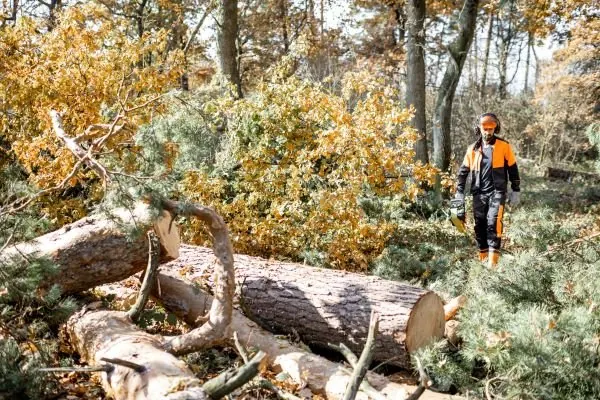
When tree removal is the right answer
Most trees around Midland earn their place. They shade west-facing walls through a long hot summer and hold the soil on sloping blocks near the scarp. But some reach a point where no amount of pruning makes them safe or practical, and removal is the honest recommendation. The common reasons people call about tree removal in Midland:
- The tree has died. Dead eucalypts dry out fast in the inland heat. The longer they stand, the more brittle and unpredictable the wood becomes for whoever has to climb them.
- It has started to lean. A tree that has always leaned is often fine. A new lean, with cracked or heaved soil on the far side of the trunk, is a warning, especially on the heavy river soils of Guildford and Woodbridge after a wet winter.
- A main fork has split. Tight V-shaped forks with bark trapped inside are a known weak point in gums and some exotics.
- It is in the wrong place. Roots lifting the slab or paving, a trunk pressing on a retaining wall, or a tree standing where a pool, shed or extension has been approved.
- It keeps dropping limbs. Some gums shed branches over cars, roofs and play areas year after year, often on still, hot days.
How the tree comes down
There are two broad methods, and the quote should say which one is planned.
Felling means cutting the trunk so the tree drops in one direction. It is quick and usually cheaper, but it needs a clear landing zone at least as long as the tree is tall. Larger rural and semi-rural blocks around Jane Brook, Helena Valley and the Swan Valley edges sometimes have that room.
Sectional removal is the normal method on suburban blocks. A climber, or an operator in an elevated work platform, takes the tree apart from the top down. Heavy pieces are lowered on ropes through a pulley so nothing free-falls onto the roof or fence. It is slower and costs more, but it is how big trees beside houses come down without damage.
After that the wood is processed. Branches go through a chipper, and the trunk is cut into rounds that are either carted away or left for firewood. Gum and jarrah firewood is popular in the hills suburbs, so say so if you want to keep some.
Things that change the price
No two removals are the same, which is why a real quote needs someone on site. The main factors are the size and condition of the tree, how close it is to buildings and wires, whether a truck and chipper can get near it, how much wood has to leave the block, and whether the stump is part of the job. Our tree removal cost guide sets out 2026 planning bands so you have a reference point before anyone visits.
Council rules and the City of Swan
Many trees on private residential land can be removed without a permit, but not all. Properties that are heritage listed, sit in a heritage area such as parts of Guildford, or carry conditions from an earlier development approval may need the City of Swan's consent. Street trees on the verge belong to the City. If there is any doubt, check with the City of Swan before work starts; the contractor quoting may know the usual answer but the council has the final word. Our Swan Valley and Guildford guide goes into the heritage side.
After the tree is gone
You will be left with a stump unless the quote included stump grinding or stump removal. Grinding is enough for lawn and garden beds. Full removal is for where a slab, footing or pool shell will sit. Decide before the day if you can, because having the same crew do both in one visit usually saves a second set-up charge.